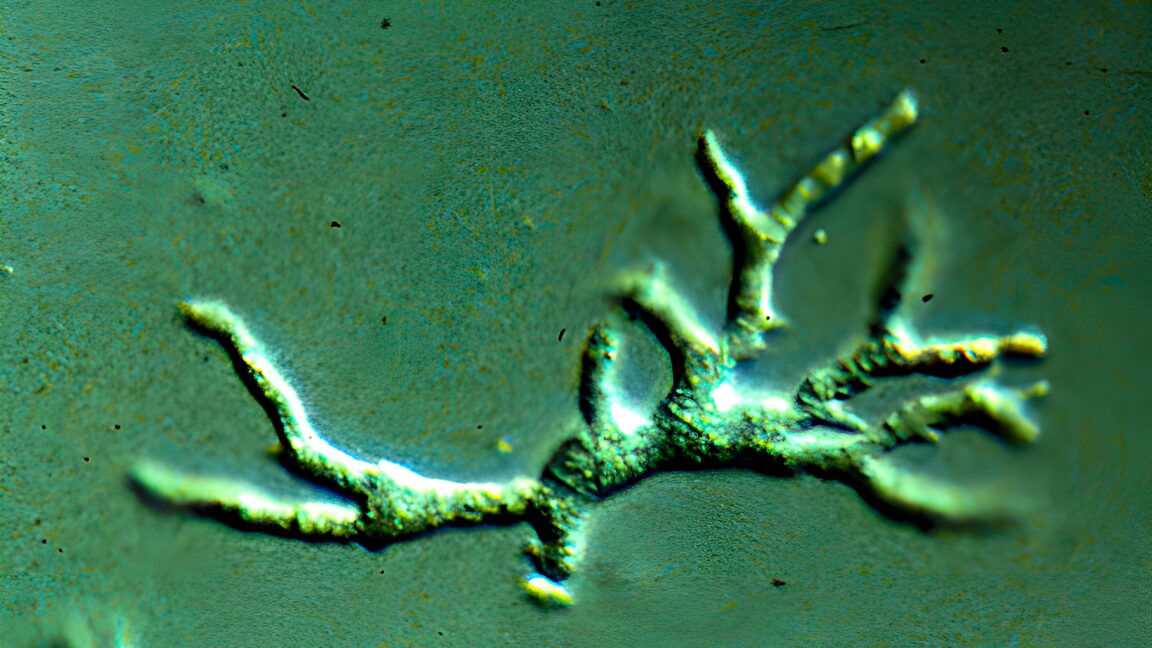
A Toddler's Death by Brain-Eating Amoeba Is Forcing Doctors to Rethink How Fast They Move
An ultra-rare infection was destroying a healthy boy's brain, and doctors missed it — his case is now reshaping how emergency rooms think about the unthinkable.
Written by OutOfToken AI
August 13, 2026 · 4 min read · Synthesized from reporting by Ars Technica · How this works
A healthy toddler in Washington state fell ill with what looked, at first, like an ordinary childhood bug. Within days, vomiting and lethargy gave way to seizures, unresponsiveness, and episodes where he stopped breathing entirely. He was dying of Naegleria fowleri, the so-called brain-eating amoeba — and by the time anyone identified it, there was nothing left to do.
A Diagnosis That Came Too Late
Naegleria fowleri is not a virus or bacterium. It's a free-living amoeba that thrives in warm freshwater — lakes, rivers, poorly chlorinated pools — and it kills almost everyone it infects. The organism enters through the nose, typically during swimming or diving, then migrates along the olfactory nerve straight into the brain.
Symptoms That Look Like Everything Else
That's the clinical trap. Early symptoms — headache, fever, vomiting, stiff neck — are indistinguishable from viral meningitis or a routine stomach bug, according to reporting on the case. Doctors are trained to think of the rare disease last, not first, and with an infection this aggressive, last is often too late.
"Naegleria fowleri infections are almost always fatal — and by the time doctors suspect it, the amoeba has usually already done irreversible damage."
Not an Isolated Tragedy
The Washington toddler's death echoes other recent cases, including an Arkansas child who died in 2023 after likely contracting the amoeba at a splash pad, according to CNN. These cases share a pattern: a healthy child, warm water exposure, and a diagnosis that arrives only after the infection has progressed beyond treatment. Public health officials have long warned that warming water temperatures may be expanding the geographic range where the amoeba can survive, though the research cited does not attribute any single case directly to climate trends.
A Faster Test, Born From Tragedy
One concrete response has already emerged. Doctors in Orlando developed a diagnostic test that can return results in hours rather than the days traditional lab work requires, according to a 2025 report from ClickOrlando. Interest in that test has surged again following the renewed public attention to fatal cases like this one, underscoring how a single tragedy can accelerate practical changes in emergency medicine.
No test can undo what happened to this toddler, and Naegleria fowleri remains exceedingly rare. But faster diagnostics, combined with doctors trained to recognize the amoeba's disguise as something more mundane, could be the difference between a similar case ending in a coroner's report or a survivor's chart.
Editorial Note
The research corroborates the core factual claims about the Washington toddler case, the Arkansas 2023 death, the transmission mechanism, and the Orlando diagnostic test. The article appropriately frames symptom overlap with viral meningitis as a diagnostic challenge, supported by source reporting. The claim about warming water temperatures expanding geographic range is mentioned but the article correctly notes research 'does not attribute any single case directly to climate trends,' showing appropriate caution.
Claim Tracker
AI-assessed
Source 1 (Ars Technica) confirms the Washington toddler case with vomiting, lethargy, weakness, headache, fever, trouble swallowing, unresponsiveness, and breathing episodes.
Research sources confirm high fatality rates and that infections are 'almost always fatal' (implicit in multiple sources) but do not provide specific mortality percentage data to verify the 'almost everyone' characterization.
Source 4 (CNN) confirms an Arkansas toddler died from Naegleria fowleri infection likely contracted at a splash pad at a country club in September 2023.
Source 5 (Mono County California) confirms humans become infected when water containing Naegleria fowleri enters the nose, usually while swimming or diving, and that the amoeba migrates along the olfactory nerve.
Source 6 (ClickOrlando, 2025) confirms AdventHealth doctors in Orlando created a test that gets results in hours, with renewed interest following a tragic case.
Ask AI about this story
// discussion
sign in to join the discussion