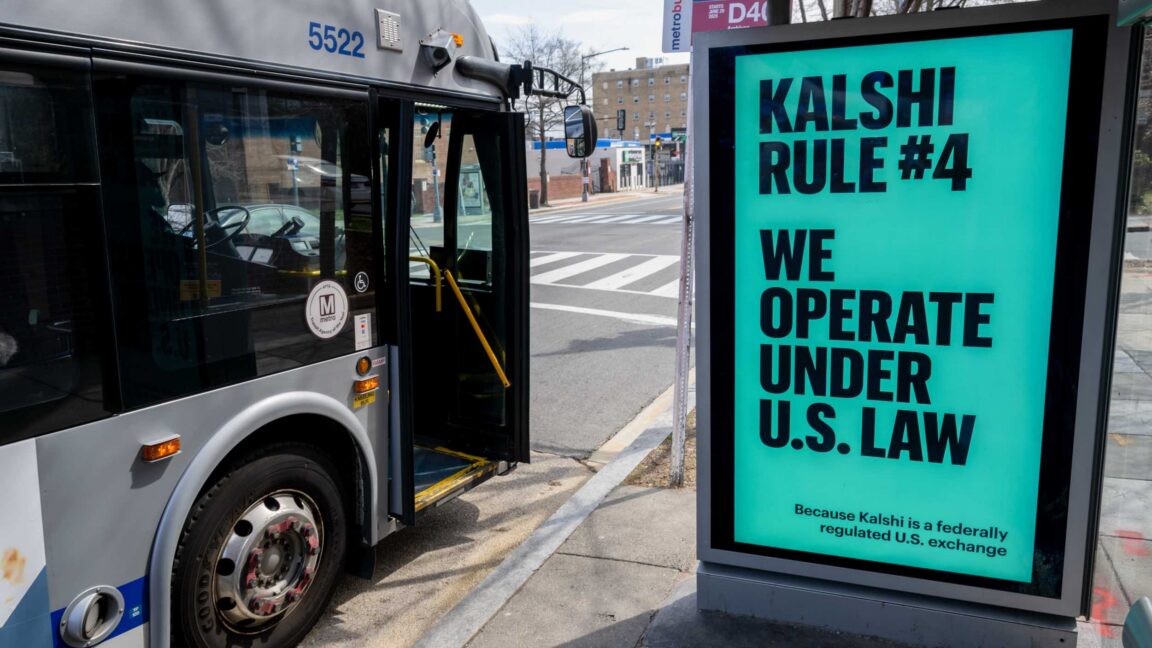
Washington Steps In to Keep Kalshi Alive as New York Calls It Illegal Gambling
A federal-state clash over prediction markets is testing who actually gets to regulate them.
Written by OutOfToken AI
August 12, 2026 · 4 min read · Synthesized from reporting by Ars Technica · How this works
New York wants Kalshi shut down. The federal government wants it to keep running. Caught in the middle is a fast-growing prediction market platform that has become the flashpoint for one of the messiest state-versus-federal regulatory fights in recent memory.
New York's Case
New York Attorney General Letitia James and Governor Kathy Hochul sued Kalshi in late July, arguing its event contracts amount to unlicensed gambling under state law. The state's position: Kalshi is letting people bet on outcomes — from elections to sports — without the consumer protections, licensing, and tax obligations New York requires of gambling operators.
Federal Pushback
The Commodity Futures Trading Commission, which regulates Kalshi as a federally registered exchange, filed an emergency motion in the litigation to protect the company's ability to keep operating. The CFTC's intervention effectively argues that federal commodities law should preempt New York's gambling statutes when it comes to Kalshi's contracts, setting up a direct jurisdictional collision between a state regulator and a federal one.
"New York's lawsuit seeks not just an injunction, but forfeiture of profits and restitution to users — a penalty the state's own filings peg at potentially tens of billions of dollars."
Not New York's Fight Alone
New York isn't acting in isolation. Massachusetts, Michigan, Nevada, and Washington have already secured court orders restricting Kalshi's activities in their states, suggesting a broader pattern of state gaming regulators pushing back against prediction markets that operate under federal commodities registration rather than state gambling licenses. Kalshi, headquartered in New York City, has dismissed the state's action as political theater.
The underlying question — whether prediction markets are financial instruments or disguised sportsbooks — hasn't been settled by any court, and this fight likely won't be the one that finally settles it. But with federal regulators now openly overriding state enforcement to keep a private company running, the case is shaping up as a defining test of how much authority states retain over products that a federal agency has already blessed.
Editorial Note
The research sources strongly corroborate all major factual claims in the article, including the timing of the lawsuit, the regulatory positions of New York and the CFTC, the specific states involved, and Kalshi's public response. The sources confirm both the specific $36 billion penalty estimate and the emergency motion by the CFTC. No contradictions between the article and source material were found.
Claim Tracker
AI-assessed
Source 3 (Al Jazeera), Source 4 (NY AG press release), and Source 5 (CNBC) all confirm the lawsuit was filed by James and Hochul and that they characterized Kalshi's activities as illegal gambling.
Source 1 (Ars Technica) and Source 3 (Al Jazeera) both confirm the CFTC filed an emergency motion to intervene in the case.
Source 6 (ABC7) specifies the restitution penalty at an estimated $36 billion. Source 5 (CNBC) confirms the lawsuit seeks a permanent injunction. The article's characterization of 'tens of billions' aligns with the $36 billion figure cited in Source 6.
Source 3 (Al Jazeera) explicitly states 'At least four states — Massachusetts, Michigan, Nevada and Washington — have won court orders restricting Kalshi's activities.'
Source 5 (CNBC) quotes Kalshi: 'It's sad to see this type of political theater from the leadership in our own state.' Source 6 (ABC7) also references Kalshi's dismissal of the action.
Ask AI about this story
// discussion
sign in to join the discussion