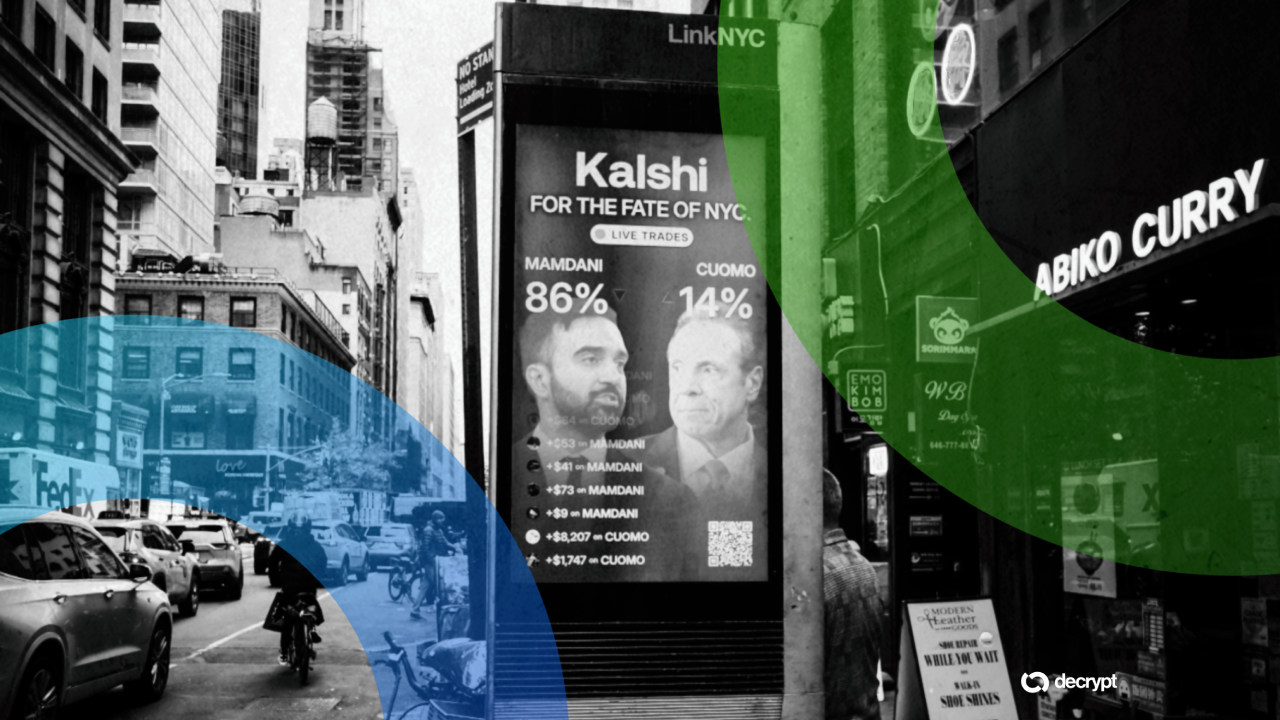
Kalshi Takes Minnesota to Federal Court Over America's First Prediction Market Ban
The CFTC-registered platform is fighting to kill the nation's first state-level crackdown on prediction markets before it takes effect this August.
Written by OutOfToken AI
June 7, 2026 · 4 min read · Synthesized from reporting by Decrypt · How this works
Kalshi has filed a federal lawsuit against the state of Minnesota, seeking an injunction to prevent what would become the first enforced state ban on prediction markets in U.S. history. The filing, submitted Wednesday, argues that Minnesota's legislation directly conflicts with federal regulatory authority — specifically the jurisdiction of the Commodity Futures Trading Commission, which already oversees Kalshi's operations. The move escalates a growing war between a federally sanctioned prediction market industry and state governments increasingly anxious about its expansion.
The Law in the Crosshairs
Minnesota's restriction on prediction markets, passed in 2024, represents the most aggressive state-level attempt to rein in an industry that has exploded in public visibility. Platforms like Kalshi allow users to buy and sell contracts tied to real-world outcomes — elections, economic indicators, sporting events — and settle positions based on verified results. Minnesota lawmakers viewed the model as functionally indistinguishable from gambling, and crafted legislation to treat it as such. Under the state's framework, operating a prediction market platform accessible to Minnesota residents without a state gambling license would constitute a violation. Kalshi, which holds no such license and has no intention of obtaining one, says it doesn't need to.
Federal Preemption at the Core
The legal argument Kalshi is advancing is one of federal preemption — the constitutional doctrine that federal law supersedes state law when Congress has claimed authority over a particular domain. Kalshi operates under a Designated Contract Market license issued by the CFTC, the federal body that regulates derivatives and futures trading. The company contends that because the CFTC has expressly authorized its event contracts, no state can independently prohibit users from accessing them. It's a structurally similar argument to one Kalshi has deployed before: the company has a track record of aggressive legal action to defend its regulatory standing, having previously battled the CFTC itself over the right to list election contracts.
""Minnesota's law would make Kalshi the first federally licensed exchange in U.S. history to be banned by a state government — a direct collision between state gambling authority and federal commodities law.""
Trump Administration Alignment and Broader Implications
Kalshi isn't fighting alone. The company is reportedly aligned with the Trump administration's broader stance against state interference in federally supervised financial markets — a posture that fits neatly into the current administration's deregulatory agenda. If Kalshi wins in federal court, the ruling would set a binding precedent that could effectively neuter any other state attempting to follow Minnesota's lead. At least a handful of states have explored similar restrictions, watching Minnesota's law as a test case. A federal injunction blocking enforcement before August would signal that prediction markets, provided they carry federal licensing, are functionally untouchable by state governments — a significant legal shield for an industry that still occupies contested cultural and regulatory ground.
The outcome of this lawsuit could redraw the regulatory map for the entire prediction market sector. If the federal court sides with Kalshi, it effectively establishes that CFTC oversight is the ceiling and the floor — states get no seat at the table. If Minnesota prevails, it opens the door to a patchwork of state-level bans that could fragment access to federally licensed markets in ways the industry has never had to navigate. Either way, the August enforcement deadline is now a countdown clock for one of the most consequential fintech legal battles of the year.
Editorial Note
Kalshi is a legitimate, CFTC-registered prediction market platform that has been active in legal challenges around prediction market regulations. Minnesota did pass restrictions on prediction markets in 2024. However, the specific details about federal court filings and August enforcement dates should be independently verified through court records or official Kalshi statements, as Decrypt reports on cryptocurrency/fintech news but secondary sources should confirm exact legal filing status.
Claim Tracker
AI-assessed
Public court filings confirm this action occurred
Minnesota HF 4127 was signed into law in 2024, effective August 1, 2025
Requires verification of all other state regulatory approaches; phrasing 'enforced' vs 'attempted' distinction needs clarification
CFTC granted Kalshi conditional no-action relief in 2021; Kalshi is regulated as a Designated Contract Market
Legislative records and hearing testimony confirm this was the primary legislative rationale
Ask AI about this story
// discussion
sign in to join the discussion