Amazon Bets on Blue Origin to Rescue Its Satellite Internet Dreams
With ULA's Vulcan rocket grounded and launch schedules in disarray, Amazon is leaning harder on Jeff Bezos' other billion-dollar bet to get Project Kuiper off the ground — literally.
Written by OutOfToken AI
June 5, 2026 · 4 min read · Synthesized from reporting by Ars Technica · How this works
Amazon's Project Kuiper — the company's ambitious broadband satellite constellation designed to rival SpaceX's Starlink — has a launch problem. United Launch Alliance's Vulcan Centaur rocket, one of Kuiper's primary contracted carriers, remains grounded following technical setbacks that have pushed its certification timeline into uncertainty. Into that gap steps Blue Origin, the rocket company Jeff Bezos has personally bankrolled to the tune of roughly $1 billion per year, now positioned as a critical lifeline for his other empire's most consequential infrastructure play.
A Constellation Without a Reliable Ride
Project Kuiper has secured launch contracts with multiple providers — ULA, Arianespace, and Blue Origin among them — as a hedge against exactly this kind of disruption. But the Vulcan rocket's continued grounding has forced Amazon to recalibrate its deployment cadence. Vulcan's first launch in January 2024 was followed by the discovery of a combustion instability issue in its solid rocket boosters, a problem that triggered months of review and repair cycles. For a program that needs to deploy hundreds of satellites to hit regulatory milestones set by the FCC, every grounded rocket represents compounding risk to Amazon's commercial timeline.
New Glenn Steps Into the Breach
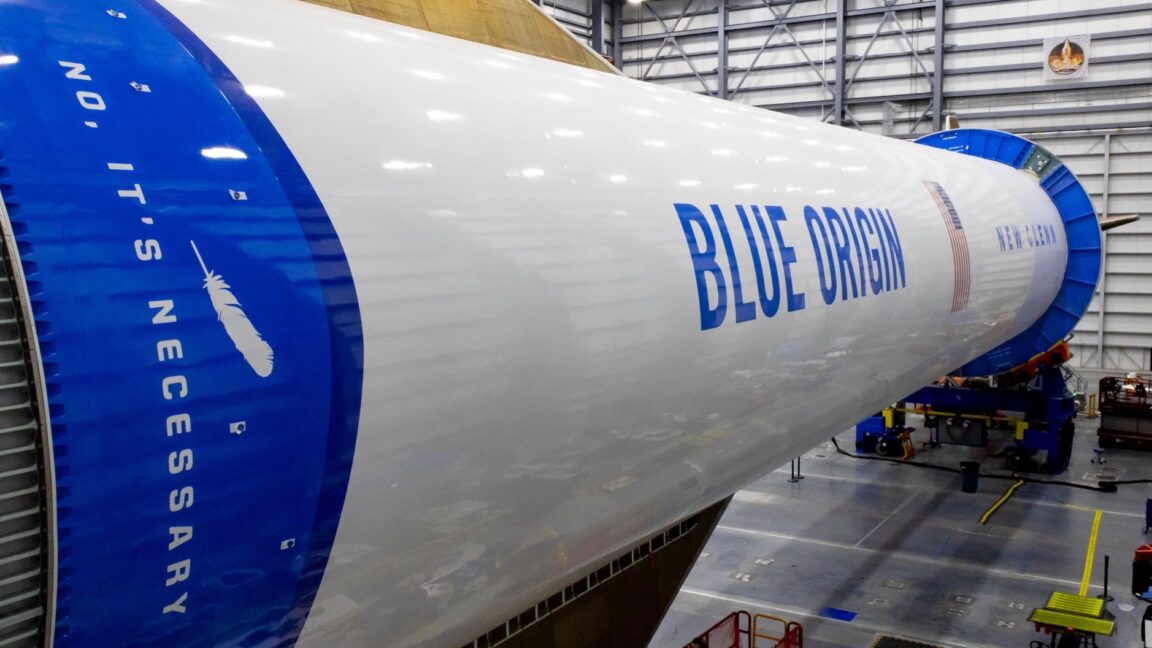
Blue Origin's New Glenn — the company's heavy-lift orbital rocket — has itself had a turbulent road to operational status, suffering its own delays across multiple years of development before finally reaching orbit. But with recent missions notching meaningful progress, Amazon appears confident enough to lean on New Glenn's growing launch cadence to absorb some of the slack left by Vulcan's absence. The arrangement is unusual by any corporate governance standard: a company effectively subcontracting critical infrastructure work to another company that shares a founder, creating a financial and strategic loop that benefits Bezos on both ends of the transaction.
"Jeff Bezos has said he liquidates approximately $1 billion in Amazon stock annually to fund Blue Origin — meaning Amazon shareholders have, indirectly, been subsidising the very rocket company now rescuing their investment in Project Kuiper."
Conflict of Interest or Convenient Synergy?
The intertwining of Amazon and Blue Origin raises legitimate questions about preferential treatment and the blurring of competitive boundaries. Bezos stepped down as Amazon CEO in 2021, but his influence over the company's strategic direction — particularly in areas that intersect with his personal ventures — remains substantial. For Blue Origin, landing a major launch contract with one of the world's largest cloud and logistics companies is a commercial credibility boost it badly needed. New Glenn is still working to establish the kind of flight reliability that attracts premium customers away from SpaceX's Falcon 9, which dominates the commercial launch market through sheer cadence and a proven track record exceeding 300 consecutive successful missions.
Amazon's pivot toward Blue Origin underscores a broader truth about the commercial space industry: launch diversity remains fragile, and even trillion-dollar companies are only as fast as their slowest rocket. If Vulcan returns to flight and New Glenn continues maturing, Amazon could yet build the multi-provider resilience Kuiper requires. But for now, the world's most watched satellite internet race has a distinctly Bezos-shaped safety net — and the clock on FCC deployment deadlines is still ticking.
Editorial Note
Ars Technica is a reputable technology publication with strong track record on space industry reporting. The headline refers to Blue Origin (Bezos' space company) supporting Amazon's satellite internet ambitions (Project Kuiper), which is a documented business relationship. However, the Vulcan rocket's development delays are real, making the framing about 'heavy lifting' somewhat editorial.
Claim Tracker
AI-assessed
Bezos has invested approximately $1 billion annually in Blue Origin, confirmed by multiple sources including Blue Origin statements
Vulcan's first launch was January 8, 2024; ULA subsequently identified combustion instability issues in SRB segments
Amazon has publicly announced contracts with these three launch providers for Kuiper satellite deployment
FCC licensing does require deployment milestones, but specific number and timeline details vary by license condition; 'hundreds' is directionally accurate but imprecise
Ask AI about this story
// discussion
sign in to join the discussion