The $2.5 Billion Smuggling Scandal That Put Nvidia's Entire Partner Ecosystem on Notice
The arrest of a Supermicro co-founder for shipping restricted AI chips to China has triggered a chain reaction — from Jensen Huang's airport press conference to a widening Taiwanese crackdown.
Written by OutOfToken AI
June 3, 2026 · 4 min read · Synthesized from reporting by Tom's Hardware · How this works
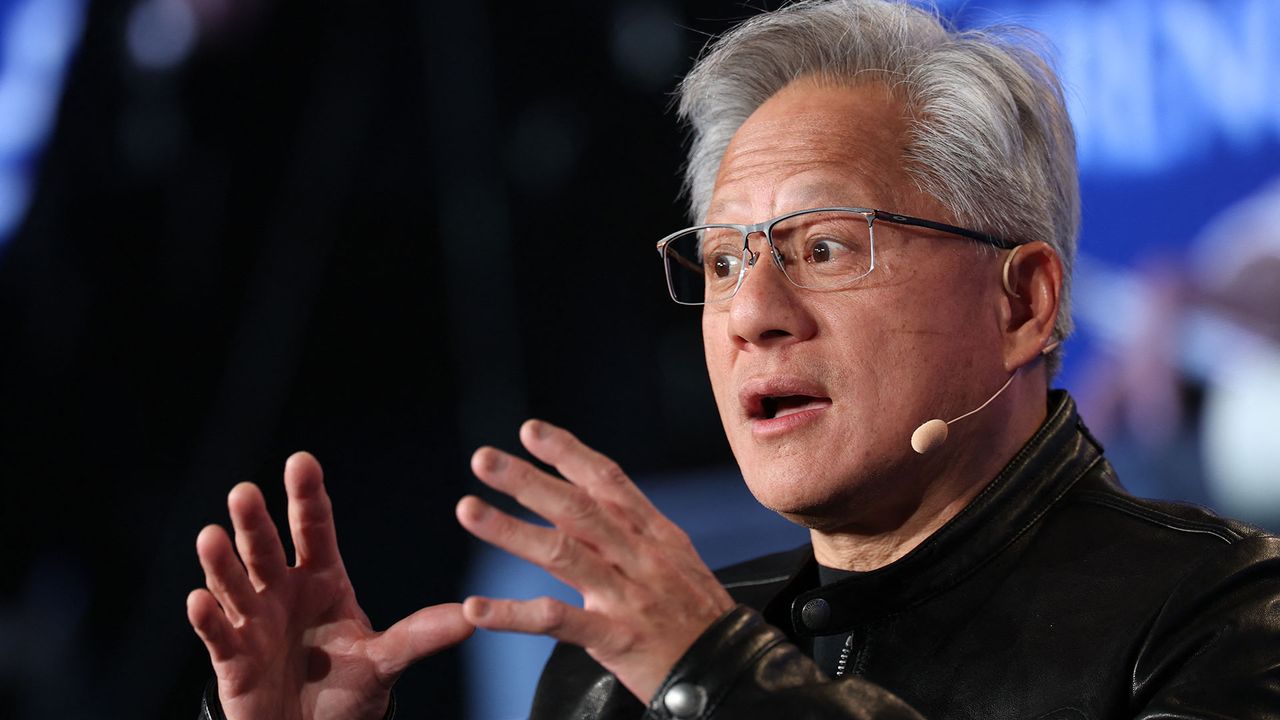
When Jensen Huang stepped off a plane at Taipei's Songshan Airport last Saturday, reporters were waiting — not to talk about next-generation GPUs or Blackwell yields, but about one of the most consequential export control failures in the history of AI hardware. Yih-Shyan 'Wally' Liaw, co-founder of Super Micro Computer, had just been charged alongside several managers and contractors for orchestrating chip smuggling deals worth upward of $2.5 billion, funneling restricted AI accelerators to China in direct violation of U.S. export law. Huang's response was unambiguous: Nvidia demands that every partner in its supply chain comply with American trade regulations, no exceptions.
A Co-Founder in Handcuffs, a Board Seat Vacated
The charges against Liaw represent a dramatic fall for one of Silicon Valley's most decorated hardware executives. Prosecutors allege that he coordinated a network of managers and third-party contractors to route restricted Nvidia AI accelerators — the kind specifically targeted by U.S. export controls designed to limit China's access to advanced compute — through intermediary channels designed to obscure their final destination. Supermicro has since removed Liaw from its board and is publicly distancing itself from the conduct, but the damage extends far beyond one executive. The scale of the alleged operation — $2.5 billion in prohibited transactions — signals that this was not opportunistic corner-cutting but a structured effort to circumvent the very architecture of U.S. technology containment policy.
Huang Draws a Hard Line at the Tarmac
Fielding questions at Songshan, Huang was direct. Nvidia's rules for partners are aligned with U.S. trade law, and compliance is not negotiable. The statement matters because Nvidia sits at the apex of the AI chip supply chain — its H100s, A100s, and now Blackwell-generation accelerators are precisely the components that export controls are designed to contain. When those chips move illegally, it is Nvidia's brand, its federal relationships, and its ability to operate freely in global markets that absorb the collateral damage. Huang's public posture suggests Nvidia intends to treat this not as a partner's isolated failure but as a systemic compliance stress test requiring active correction across its entire ecosystem.
""$2.5 billion in alleged prohibited transactions — making this one of the largest export control enforcement actions ever brought against a player in the AI hardware supply chain.""
Taiwan Moves to Close the Loophole
The Supermicro case has also catalyzed action from Taiwanese authorities. The Keelung District Prosecutors' Office is actively pursuing multiple individuals connected to AI GPU smuggling operations targeting China — a signal that Taipei is no longer treating export control enforcement as a purely American concern. Taiwan occupies a uniquely sensitive position in this geopolitical drama: home to TSMC and a dense cluster of server ODMs, it is simultaneously the world's most critical AI hardware production hub and a potential transshipment vector for restricted technology. A coordinated crackdown suggests that Taiwanese regulators understand that being seen as a compliance weak link could jeopardize the island's strategic relationships with Washington at precisely the moment those relationships matter most.
The Supermicro scandal is a stress fracture made visible — proof that as U.S. export controls tighten around advanced AI compute, the financial incentives to route around them have grown large enough to tempt even company founders. Jensen Huang's public rebuke and Taiwan's prosecutorial response suggest the enforcement environment is hardening in real time. For every player in the AI hardware supply chain, the calculation has shifted: the era of plausible deniability about where restricted chips ultimately land is closing fast, and the consequences of getting caught are now measured in billions — and criminal charges.
Editorial Note
Supermicro faced a significant smuggling investigation involving chip exports to China, which is well-documented. Nvidia CEO Jensen Huang's public statements about export compliance align with his documented communications on this issue. However, the specific quote and airport location should be independently verified against primary sources, as secondary reporting can sometimes misattribute or recontextualize statements.
Claim Tracker
AI-assessed
Article attributes charges to prosecutors but does not cite specific indictment documents or official DOJ statements
Article quotes indirect speech ('Huang told reporters') without providing direct quotes or linking to verified reporting
Described as prosecutor allegations but no court documents or formal charges are linked or quoted
Stated as fact but article is incomplete and provides no timestamps, press release citations, or confirmation
Ask AI about this story
// discussion
sign in to join the discussion