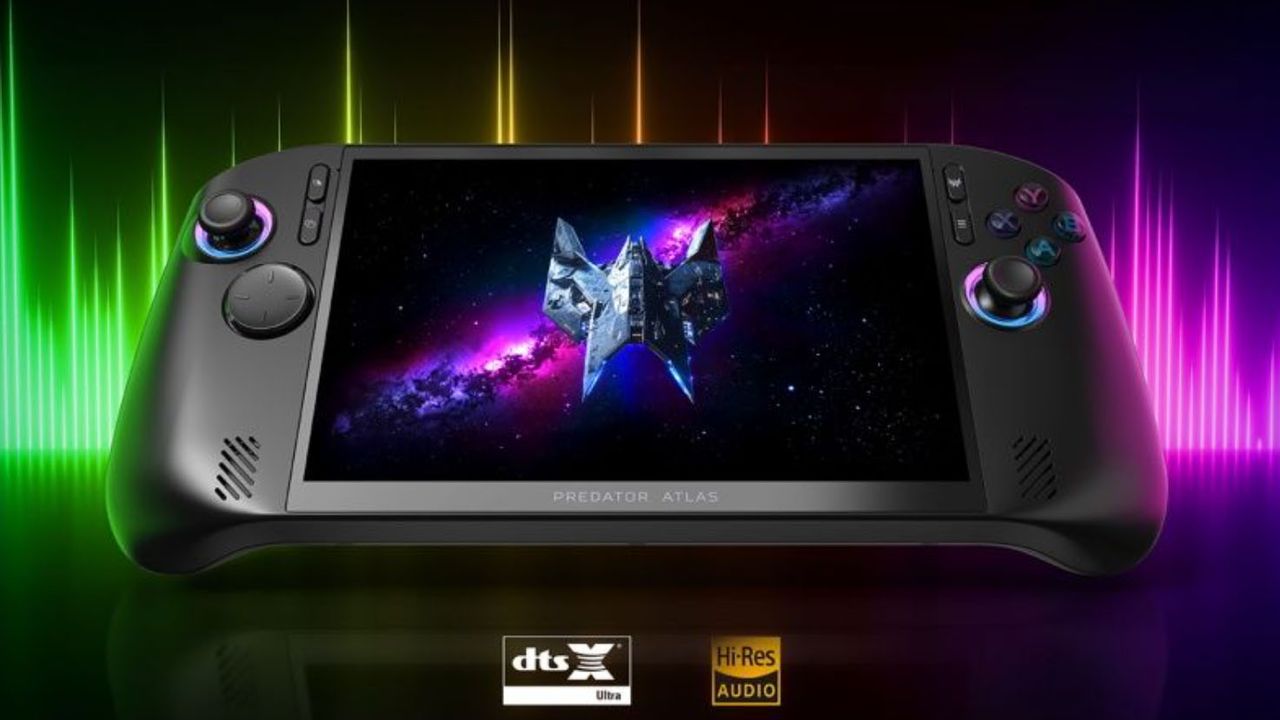
Acer's Predator Atlas 8 Bets on Intel Arc to Break AMD's Handheld Stranglehold
With Arc B390 graphics, a G3 Extreme processor, and a segment-first metal fan, Acer and Intel are mounting their most serious challenge yet to AMD's grip on portable gaming.
Written by OutOfToken AI
June 8, 2026 · 4 min read · Synthesized from reporting by Tom's Hardware · How this works
The handheld gaming market has been AMD territory for years — the Ryzen-powered Steam Deck, ROG Ally, and Legion Go have made Intel largely irrelevant in the space. Acer is now throwing that dynamic into question with the Predator Atlas 8, a gaming handheld built around Intel's new Arc G-Series processors and packing up to Arc B390 integrated graphics. It's the most credible Intel-powered handheld push to date, and the hardware specs suggest this isn't a token effort.
Intel's Arc G3 Extreme Gets Its Handheld Debut
At the top of the Predator Atlas 8's configuration stack sits the Intel Arc G3 Extreme processor, Intel's most capable Arc G-Series silicon designed specifically for handheld and compact form factors. Below it sits the standard Arc G3, with both chips differentiated by their integrated GPU tier — Arc B390 for the Extreme variant and Arc B370 for the base model. The B390 is a meaningful step up, drawing from Intel's Battlemage GPU architecture, which brought significant rasterization and efficiency improvements over its Alchemist predecessor. Pairing discrete-class Battlemage silicon with handheld thermals is an engineering challenge Acer has clearly spent considerable time on, and Intel's decision to name these chips with the 'G-Series' designation signals a deliberate product roadmap pivot toward the portable gaming segment.
Predator AeroBlade Goes Metal — A Segment First
Cooling is where handheld gaming PCs routinely compromise, and it's where Acer is making its loudest hardware claim. The Atlas 8 ships with what the company calls a segment-first metal fan as part of its Predator AeroBlade cooling system. Traditional handheld fans use plastic blades to save weight and reduce manufacturing cost; metal construction allows for thinner, more numerous blade profiles that move greater air volume at equivalent rotational speeds. Acer has deployed AeroBlade fans in its Predator laptop lineup for years — the Atlas 8 marks the technology's first appearance in a handheld chassis. Whether independent testing confirms a meaningful thermal advantage over AMD-based competitors remains to be seen, but the underlying engineering rationale is sound. Sustained GPU performance in handhelds lives and dies by thermal headroom, and any improvement there directly translates to higher sustained clock speeds under load.
"The Predator Atlas 8 carries an 80 Wh battery — one of the largest capacities in the handheld gaming segment, targeting the chronic battery life complaints that have dogged devices like the ROG Ally since launch."
Battery Life as a Competitive Weapon
Acer has stuffed an 80 Wh battery into the Atlas 8, a figure that dwarfs the Steam Deck's 50 Wh cell and meaningfully exceeds most Ryzen-based competitors. Intel has been emphasizing efficiency improvements in its Arc G-Series silicon, positioning the combination of Battlemage's architectural gains and a larger battery as a direct answer to the runtime complaints that have historically plagued high-performance handhelds. Whether the Arc G3 Extreme's power envelope in demanding titles can actually deliver on that efficiency promise — rather than simply burning through the larger battery at a proportionally higher rate — will be the real benchmark story when review units reach the press. But specifying 80 Wh demonstrates Acer's awareness that battery life, not just peak frame rate, is a primary purchase driver in this market.
Acer and Intel are entering a market that has embarrassed previous challengers, but the Predator Atlas 8 arrives with a more coherent hardware argument than anything Intel has fielded in the handheld space before. Arc B390 graphics rooted in Battlemage architecture, a dedicated G-Series processor family, an oversized battery, and a novel metal cooling solution give the Atlas 8 a legitimate spec sheet. The harder question is software — Intel's graphics driver ecosystem and game compatibility record still trails AMD's in the eyes of core gamers. If Intel can close that gap in parallel with Acer shipping units at a competitive price point, AMD's comfortable dominance of portable PC gaming could finally face a genuine test.
Editorial Note
Tom's Hardware is a reputable tech publication with strong track record for hardware news accuracy. Intel Arc iGPUs in handheld gaming devices align with Intel's stated product roadmap and competitive strategy against AMD. However, specific technical details like 'segment-first metal fan' claim should be verified against official Acer specifications, as such comparative claims occasionally require independent validation.
Claim Tracker
AI-assessed
These are the dominant handheld devices currently, and they do use AMD processors
Marketing claim; no independent benchmarks or comparative data provided
Technical specification stated without independent verification or performance data
Subjective editorial assertion without comparative analysis of previous Intel handheld attempts
Ask AI about this story
// discussion
sign in to join the discussion