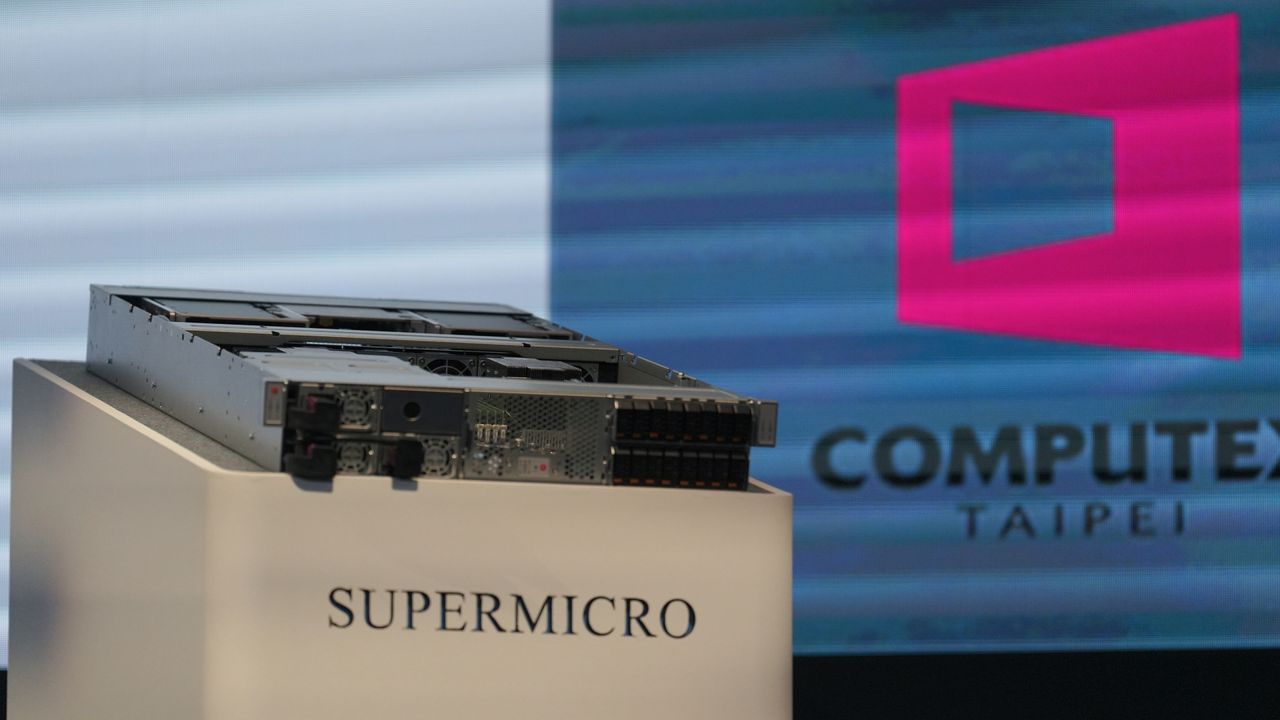
Supermicro Helped Bust Its Own Supply Chain
The server giant worked directly with Taiwanese law enforcement to intercept 50 of its own machines headed illicitly toward China — and three people are now under arrest.
Written by OutOfToken AI
June 7, 2026 · 4 min read · Synthesized from reporting by Tom's Hardware · How this works
Supermicro didn't wait for regulators to come knocking. The NASDAQ-listed server manufacturer says it proactively collaborated with Taiwanese authorities on an enforcement operation that ended with 50 servers seized, three individuals arrested, and a clear message sent to anyone treating high-performance computing hardware as contraband. The bust, which surfaced publicly on May 28, represents one of the most direct examples yet of a major US tech manufacturer embedding itself inside export control enforcement — rather than simply reacting to it.
Inside the Operation
According to Supermicro's official statement, the company worked closely with Taiwanese law enforcement to identify and intercept a smuggling operation attempting to divert its server technology to China in violation of export regulations. Taiwanese authorities moved quickly once the intelligence picture solidified, executing arrests and confiscating the hardware before it could complete the journey. The 50 servers in question represent serious computational infrastructure — Supermicro's product lines span high-density AI training rigs, GPU-accelerated systems, and enterprise storage platforms, any of which would carry significant strategic value if routed around US export restrictions.
Why Supermicro Is in the Middle of This Fight
Supermicro occupies an unusual position in the geopolitical hardware wars. Founded by Taiwanese-American entrepreneur Charles Liang and headquartered in San Jose, the company manufactures extensively in Taiwan and has deep supply chain roots across the region. That geographic footprint makes it both a target for diversion schemes and a uniquely capable partner for enforcement agencies operating in that corridor. The company has faced scrutiny of its own in the past — including an accounting investigation and a now-debunked 2018 Bloomberg report alleging Chinese spy chips — but has worked in recent years to rebuild institutional trust. Actively aiding law enforcement in a live smuggling bust is a conspicuous demonstration of that posture.
""Supermicro worked closely with Taiwanese authorities to prevent the illicit diversion of server technology" — the company's formal statement frames the operation not as a one-off but as part of ongoing compliance coordination with both US and Taiwanese regulators."
The Broader Export Control Crackdown
The operation lands against a backdrop of intensifying US-led efforts to choke off China's access to advanced computing hardware. The Biden administration's sweeping chip export controls, extended and refined under the Trump administration, have made high-end server platforms a prized smuggling target. Enforcement has lagged the policy — customs agencies and export control bodies have struggled to monitor the labyrinthine network of intermediaries, shell companies, and third-country transshipment routes used to move restricted technology eastward. Taiwan is a critical chokepoint in this network, both as a manufacturing hub and as a geographic waystation. Supermicro's willingness to share intelligence with Taiwanese authorities suggests that hardware companies are increasingly being recruited — or volunteering — as active nodes in the enforcement architecture, not merely passive subjects of it.
Three arrests and 50 confiscated servers won't close the smuggling pipeline on their own, but Supermicro's public posture signals something more structurally significant: major hardware manufacturers are moving from compliance checkbox-ticking to operational partnership with export enforcement agencies. As US controls on AI infrastructure tighten further and Beijing's demand for advanced compute remains insatiable, expect the line between tech company and enforcement collaborator to blur considerably more. The hardware wars are no longer being fought only in Washington and Beijing — they're being decided in server rooms and customs warehouses across Taiwan.
Editorial Note
Supermicro is a legitimate, publicly-traded server manufacturer with documented history of compliance cooperation. Tom's Hardware is a reputable tech publication. The claim aligns with known US-Taiwan security cooperation on technology export controls and recent enforcement actions against illegal diversion to China, though independent verification of specific operational details remains limited.
Claim Tracker
AI-assessed
Supermicro issued an official statement; corroborated by public reporting on May 28 enforcement action
Specific numbers cited but sourced only from Supermicro's statement; no independent official Taiwanese law enforcement confirmation provided in article
Alleged intent stated by Supermicro; no court documents, charges, or independent law enforcement statements quoted to confirm details
Supermicro Systems Inc. is publicly traded on NASDAQ under ticker SMCI
Ask AI about this story
// discussion
sign in to join the discussion