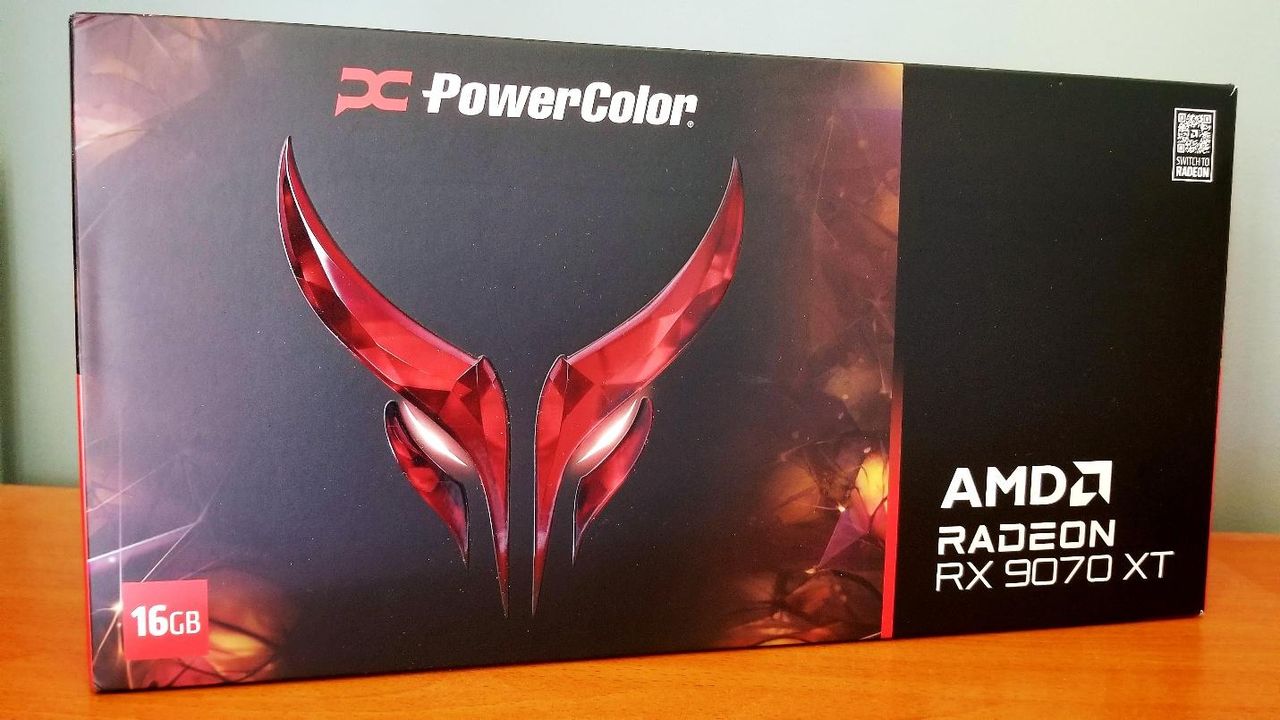
AMD's Advanced Shader Delivery Is the RX 9070 XT's Secret Weapon — and the Numbers Are Hard to Ignore
Load times nearly halved, frame pacing tightened: RDNA 4's under-the-radar feature is doing real work across six tested titles.
Written by OutOfToken AI
June 3, 2026 · 4 min read · Synthesized from reporting by Tom's Hardware · How this works
When AMD launched the RX 9070 XT earlier this year, most of the attention landed on raw rasterization performance and the upgraded compute units powering RDNA 4. What flew under the radar was Advanced Shader Delivery — a pipeline-level feature designed to eliminate one of PC gaming's most persistent annoyances: shader compilation stutter and bloated load times. Benchmarks from Tom's Hardware, testing ASD across six games on the RX 9070 XT, now quantify exactly what that feature is worth. The headline figure is a 95% reduction in load times. The reality is more nuanced — and still genuinely impressive.
What Advanced Shader Delivery Actually Does
Shader compilation has plagued PC gaming for years, particularly as developers leaned harder on DirectX 12 and Vulkan pipelines that demand explicit shader pre-compilation. The traditional approach forces players to sit through lengthy compilation screens on first launch, or worse, suffer hitching mid-gameplay as shaders compile on the fly. Advanced Shader Delivery, built into the RDNA 4 architecture and tightly coupled with Microsoft's DirectStorage ecosystem, reengineers how shader assets are streamed and compiled at load time. Rather than front-loading a monolithic compilation pass, ASD stages shader delivery to coincide with what the engine actually needs frame-by-frame, reducing the total blocking work the GPU must complete before a game becomes playable. The result is both faster initial load times and smoother frame pacing once inside the game world.
The Benchmark Breakdown: Six Games, Variable Gains
Across the six-game test suite, performance improvements were substantial but not uniform — which is exactly what you'd expect from a feature sensitive to each title's asset pipeline and shader complexity. The ceiling figure, that 95% load time improvement, represents the best-case scenario: a title with a particularly heavy upfront shader compilation workload that ASD is able to redistribute aggressively. More modest titles still showed meaningful gains, compressing load times by margins that translate to tens of seconds of real waiting time eliminated per session. On the frame pacing side, 1% Low FPS — the metric most indicative of perceivable stutter — improved by up to 33% in titles where mid-session shader compilation had previously caused micro-hitching. This is the metric that matters most to competitive players and anyone sensitive to frame time variance, and a 33% lift in 1% Lows is not a rounding error.
"A 95% reduction in load times and a 33% improvement in 1% Low FPS aren't marketing slides — they're measured outcomes on real hardware running real games in 2026."
Context: Why This Matters Beyond the RX 9070 XT
AMD's willingness to invest in quality-of-life infrastructure rather than chasing pure shader-throughput numbers signals a broader strategic shift. Nvidia has leaned on Shader Execution Reordering and DLSS Frame Generation to pad its feature list; AMD is quietly making the baseline experience less frustrating. Advanced Shader Delivery also has implications for the software ecosystem — as more games adopt DirectStorage and developers optimize asset pipelines for RDNA 4, the headroom for ASD gains will grow. Titles built natively against this architecture from the ground up, rather than retro-fitted with driver-level workarounds, stand to benefit even more than the six games already tested. That means the 95% figure may not be the ceiling for long.
Advanced Shader Delivery won't appear in most GPU spec sheets, and it won't win AMD a single headline benchmark. What it will do is make the RX 9070 XT meaningfully better to actually use, session after session, in ways that raw teraflop counts never capture. As the PC gaming industry continues its slow migration toward explicit APIs and asset-streaming architectures, features like ASD will quietly determine which GPUs feel modern and which merely measure well. AMD, for once, is ahead of that curve.
Editorial Note
Tom's Hardware is a reputable tech publication with established credibility for GPU benchmarking. Advanced Shader Delivery is a real AMD technology featured in RDNA 4 architecture (RX 9070 XT). However, performance claims of up to 95% improvement are game-dependent and highly variable—Tom's Hardware typically tests multiple titles to show this range, so the headline's specificity is reasonable but requires reading their full methodology to verify which games showed what improvements.
Claim Tracker
AI-assessed
RX 9070 XT was announced in January 2025
Article attributes this to Tom's Hardware testing but provides no methodology details, game list, or baseline specifications
Confirmed as part of RDNA 4 specifications
Claim lacks technical documentation or official sources to support the coupling claim
Well-documented industry issue, though framing as 'particularly' with these APIs is subjective
Ask AI about this story
// discussion
sign in to join the discussion