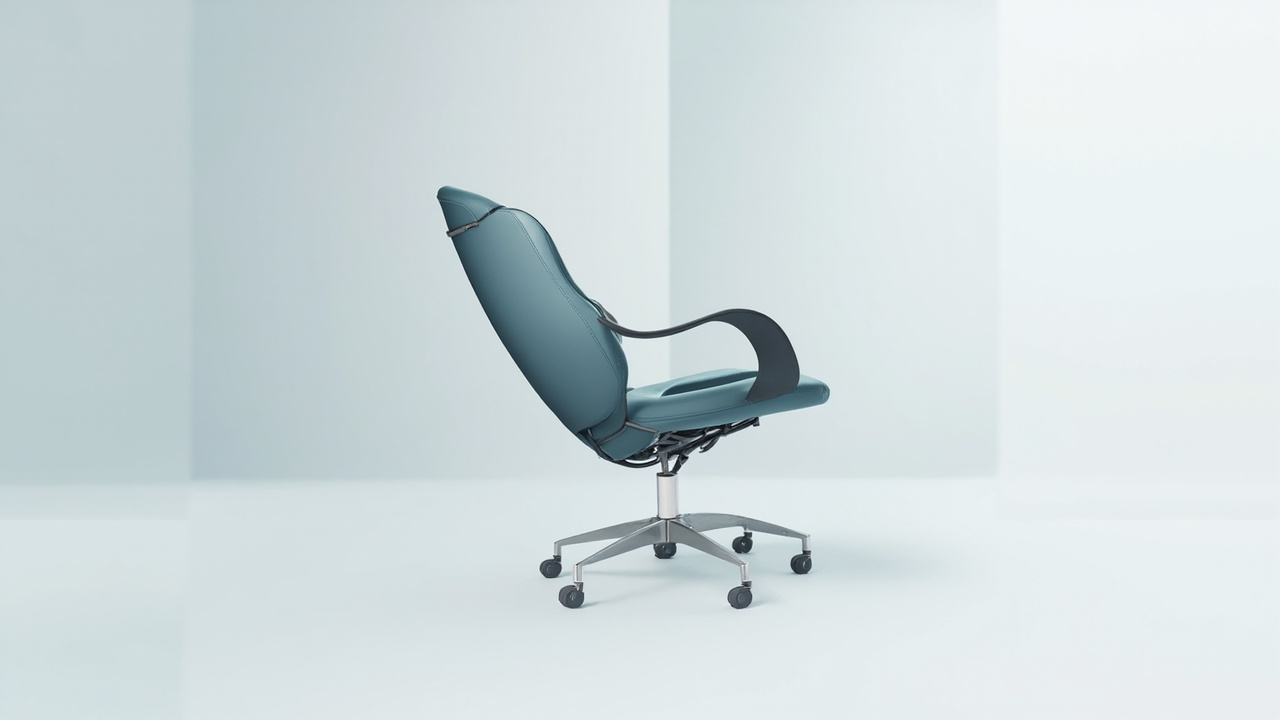
How to Select the Office Chair That’s Right For You
The right chair isn't the priciest one — it's the one that actually fits your body.
Written by OutOfToken AI
August 12, 2026 · 4 min read · Synthesized from reporting by Wired · How this works
The office chair market is flooded with options promising to fix your back, your posture, and your productivity in one purchase. Most of that is marketing noise. The real answer, according to ergonomics experts, has less to do with brand names and more to do with basic fit: your height, your physique, and how you actually sit.
Adjustability Beats Aesthetics
Ergonomists consistently point to three non-negotiable features: adjustable height, lumbar support, and armrests. A chair that can't adapt to your specific dimensions is working against you, no matter how sleek it looks in a product photo. Fixed-height chairs and rigid backrests force your body to compensate, which is where fatigue and pain start creeping in.
Start With Your Feet, Not Your Back
The foundation of a good seated posture is deceptively simple: feet flat on the floor, knees roughly level with hips. If a chair's lowest height setting still leaves your feet dangling, it's not built for your frame, regardless of how many lumbar knobs it has. Height adjustability is the first filter — everything else is secondary until that's solved.
"The goal isn't the fanciest chair on the market — it's the one engineered to match the shape of your own spine."
Lumbar Support Isn't One-Size-Fits-All
Lower back support needs to sit at the natural curve of your spine, which varies significantly by body type and torso length. A built-in lumbar bump that works for one person can hit entirely the wrong spot on another, creating pressure instead of relief. This is why in-person testing, or at minimum chairs with adjustable lumbar positioning, matters more than online specs alone.
Armrests Do More Work Than You Think
Armrests aren't just a resting spot — they take weight off your shoulders and neck during long typing sessions. Ergonomic guidance favors armrests that adjust in height and width so your shoulders stay relaxed rather than hunched or splayed. For taller or larger-framed users, fixed, narrow armrests can actually force worse posture than having no armrests at all.
Budget Doesn't Have to Mean Compromise
Expensive doesn't automatically mean ergonomic, and budget doesn't automatically mean bad. The priority list stays the same at every price point: can you adjust the height, does the lumbar support hit your actual lower back, and can the armrests move to match your arm length. A cheaper chair that nails those three fundamentals will outperform a premium chair that ignores them for your specific body.
The Chair Isn't a Cure-All
Even a perfectly fitted chair can't offset hours of static sitting. Ergonomists stress that movement — standing, stretching, shifting position — is just as critical as the chair itself. Treating the chair as the entire solution, rather than one piece of a broader posture strategy, is a common and costly mistake.
As remote and hybrid work keep desks in homes rather than corporate offices, the pressure to get this decision right only grows. There's no universal 'best' chair — only the one that matches your height, physique, and how you actually work. Testing before buying, when possible, remains the most reliable filter of all.
Editorial Note
Source 1 (ErgoPlus) directly corroborates the article's core ergonomic claims about adjustable height, lumbar support, armrests, and proper seated posture. Sources 2-6 are entirely irrelevant to office chair ergonomics and appear to be unrelated research material. The article's main factual assertions align well with the one applicable source.
Claim Tracker
AI-assessed
Source 1 (ErgoPlus Office Ergonomics article) confirms these three features as core ergonomic requirements for office chairs.
Source 1 (ErgoPlus) affirms this postural alignment as a key ergonomic principle for proper office chair setup.
Source 1 (ErgoPlus) discusses the importance of personalized lumbar support that matches individual spinal curves.
Source 1 (ErgoPlus) supports adjustable armrests as a feature that reduces shoulder and neck strain during extended use.
Sources 2-6 are irrelevant (Big Tech discussions). Source 1 focuses on ergonomic principles but does not directly evaluate marketing claims in office chair advertising.
Ask AI about this story
// discussion
sign in to join the discussion