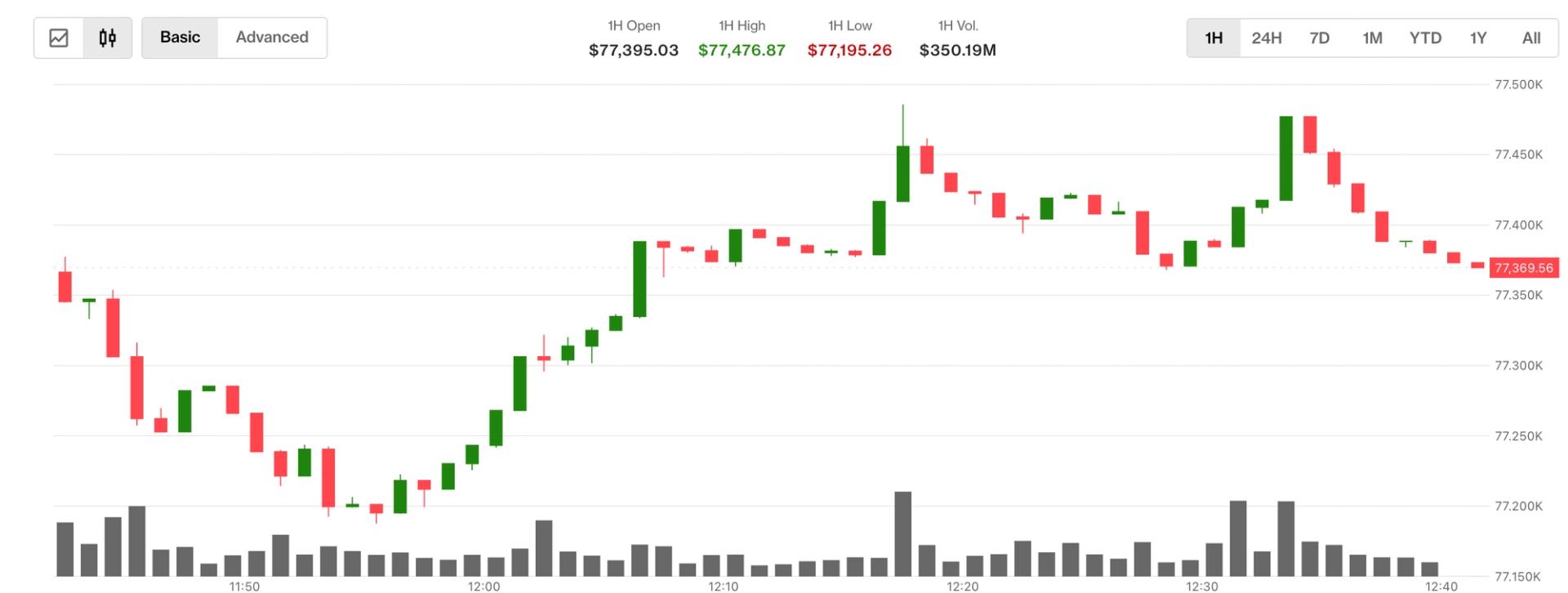
Bitcoin Holds Above $77K as Oil's 5% Collapse Sends a Ripple Through Asian Markets
A potential Strait of Hormuz reopening triggered a commodity selloff that quietly lifted crypto sentiment across the board.
Written by OutOfToken AI
June 4, 2026 · 4 min read · Synthesized from reporting by CoinDesk · How this works
Bitcoin traded near $77,200 on Thursday, up roughly 0.4% on the day, as a sharp 5% decline in crude oil prices cascaded through Asian equity markets and provided an unexpected tailwind for digital assets. The move was catalyzed by reports suggesting a potential reopening of the Strait of Hormuz — one of the world's most critical oil chokepoints — easing geopolitical risk premiums that had kept energy prices elevated. Risk-on sentiment spread quickly, and crypto markets were among the first to absorb the shift.
The Hormuz Effect: How a Shipping Lane Moved Bitcoin
The Strait of Hormuz handles roughly 20% of global oil transit, and any hint of stabilization in that corridor has an outsized effect on energy futures. When reports emerged of diplomatic movement toward reopening, Brent crude shed approximately 5% in a matter of hours — a significant single-session decline that recalibrated risk calculations across asset classes. Lower oil prices reduce inflation expectations, which in turn lowers pressure on central banks to maintain aggressive monetary tightening. That logic flows directly into growth-sensitive assets, including equities and increasingly, Bitcoin. The correlation isn't mechanical, but the directionality has become consistent enough that traders now monitor crude as a macro signal for crypto.
Asian Equities Lead the Risk Rally
Japanese, South Korean, and Hong Kong indices posted meaningful gains during their Thursday sessions, benefiting both from the oil price relief and from the reduced threat of inflationary pressure that cheaper energy implies. Energy-importing economies in Asia are acutely sensitive to crude price movements — a 5% drop in oil functions almost like a fiscal stimulus across the region, improving corporate margins and consumer purchasing power simultaneously. The equity rally set a constructive tone heading into European and U.S. trading hours, and crypto markets, which operate around the clock, had already begun pricing in the shift before Western traders arrived at their desks.
"Bitcoin traded at approximately $77,200 — up 0.4% on the session — while XRP and Solana also registered gains, underscoring a broader altcoin participation in the macro-driven relief rally."
Context Matters: Bitcoin's Volatile Week
Thursday's stability sits inside a notably turbulent week for Bitcoin. The asset had touched highs near $82,000 earlier in the period before retreating to lows around $78,600 — a roughly 4% drawdown — after the U.S. Senate Banking Committee advanced crypto-related legislation that introduced fresh regulatory uncertainty. The oil-driven recovery partially offset that pressure, stabilizing sentiment without erasing underlying concerns about how incoming U.S. crypto regulation might reshape market structure. For traders, the session represented a tactical reprieve rather than a fundamental reversal. Altcoins including XRP and Solana tracked Bitcoin's modest gains, suggesting the move was broad-based rather than isolated to a single asset thesis.
Whether the Strait of Hormuz situation develops into a sustained de-escalation or proves to be a short-lived diplomatic signal will determine how long this macro tailwind persists. If oil prices stabilize at lower levels, the disinflationary pressure could give major central banks additional room to ease — a scenario that has historically been favorable for risk assets including crypto. Bitcoin's ability to hold the $77,000 level through a week of regulatory headwinds and volatile swings suggests underlying demand remains intact, but the market remains acutely tethered to macroeconomic forces that operate well outside the blockchain.
Editorial Note
The causal chain presented (oil drop → Asian equity gains → crypto support) is plausible and follows typical market correlation patterns. CoinDesk is a reputable crypto-focused news source with editorial standards. However, the specific claim requires verification of actual oil price movements, Bitcoin's price at publication time, and Asian market performance on the date of reporting.
Claim Tracker
AI-assessed
Real-time price data requires verification against historical records for specific date
Specific magnitude and timeframe requires verification; plausible but not independently confirmed
US Energy Information Administration and similar sources confirm approximately 20-21% of seaborne oil passes through Strait of Hormuz
Standard economic principle; relationship is established though not universally deterministic
Causal claim requires verification of actual news events and timeline on the specific date referenced
Ask AI about this story
// discussion
sign in to join the discussion