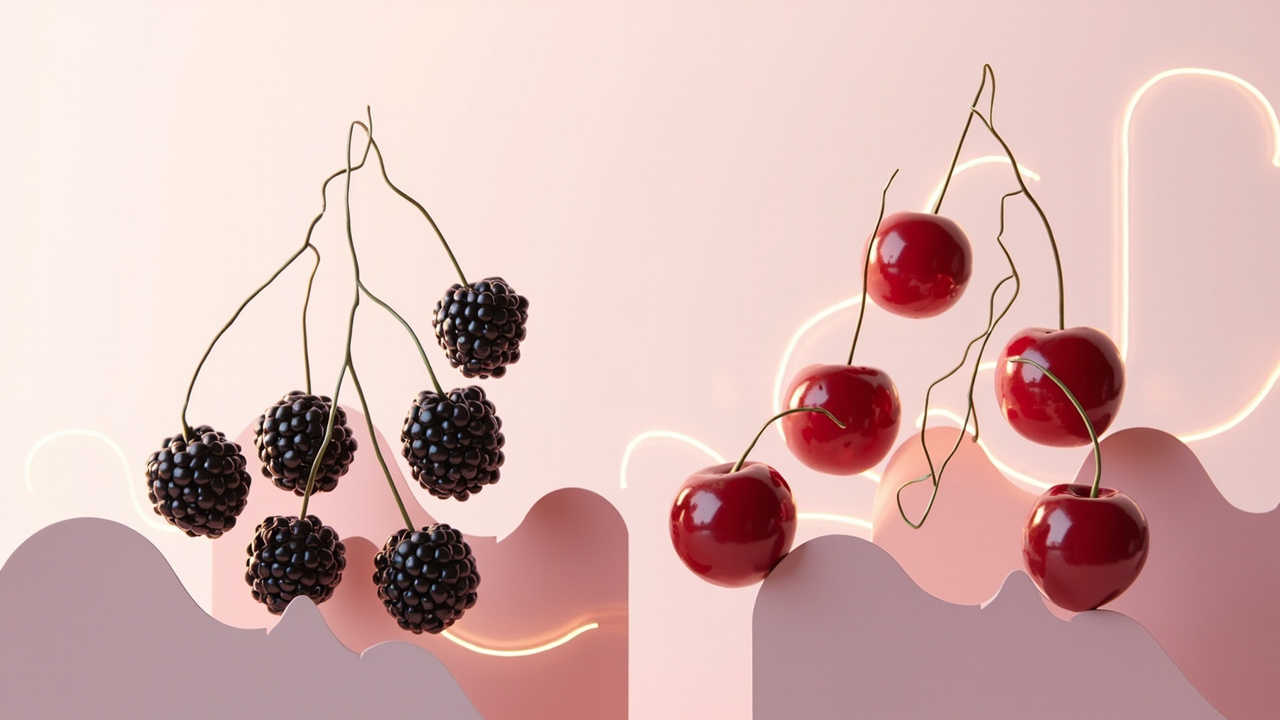
Seedless Blackberries and Cherries That Grow on Bushes Vie to Be the Future of Food
Startups and Big Ag are using CRISPR gene editing to build fruit for a hotter planet, taste-first — but the market hasn't caught up to the science yet.
Written by OutOfToken AI
August 11, 2026 · 4 min read · Synthesized from reporting by Wired · How this works
A blackberry with no seed stuck in your teeth. A cherry with no pit to spit. It sounds like a minor kitchen convenience, but it's the product of years of CRISPR gene-editing work by agricultural biotech startup Pairwise, which now says it has produced the first seedless blackberry.
The Pit Problem
Pairwise's origin story starts with an annoyance most fruit lovers know well. Blackberry seeds are technically pits, botanically identical in function to the stone inside a cherry, and removing them was pitched internally as a 'moonshot' project years ago.
From Cherries to Berries
The company actually set out to build a pitless cherry first. That project proved harder than expected, partly because trees take far longer to develop and test than annual crops, so Pairwise's researchers redirected their gene-editing know-how toward blackberries instead, and got there first.
The Cherry Moonshot Continues
Pitless cherries haven't gone away. According to Pairwise, lessons learned from engineering out the blackberry's seed are now being applied directly to cherries, whose pit forms through a similar biological process.
""The moonshot idea is you turn the cherry tree into a bush, so you can grow it under hoop houses like blueberries. Then you could grow cherries in a lot more environments.""
Trees to Bushes
That bush ambition is more than cosmetic. Traditional cherry trees are tall, slow to mature, and geographically finicky, thriving only in narrow climate bands with the right winter chill and growing season length.
Why Bother Editing Fruit at All
Pairwise's broader pitch is public health as much as convenience. Only a small fraction of people eat the recommended amount of fruits and vegetables, and the company has argued that removing physical annoyances like seeds and pits could nudge consumption upward by making fruit easier to eat straight out of the container.
The Timeline Problem
Here's where the story gets less tidy. Pairwise once projected seedless blackberries could reach shelves as early as 2023, with pitless cherries following years later given the extra time trees need to mature and fruit reliably.
Still a Work in Progress
More recent statements from the company, including a 2026 press release, describe continuing research and development rather than a confirmed retail rollout. That gap between announced breakthrough and grocery-store reality is common in agricultural biotech, where trees and fruiting cycles simply can't be rushed the way software or even annual crops can.
CRISPR's Trust Problem
Gene-edited produce also carries baggage from earlier eras of agricultural biotech, when companies were criticized for being opaque about what they were doing and why. Pairwise and its backers seem aware that consumer trust, not just plant biology, will determine whether CRISPR fruit actually finds a market.
Whether seedless blackberries and pitless, bush-grown cherries become supermarket staples or stay a promising lab story depends on execution timelines that have already slipped once. But the underlying bet, that fruit engineered for convenience and climate resilience can reshape how much produce people actually eat, is one Big Ag and startups alike seem unwilling to abandon.
Editorial Note
Research corroborates the core factual claims about Pairwise's seedless blackberry achievement, the botanical similarities between seeds and pits, the 2023 market timeline, and the motivation regarding fruit consumption rates. However, the research provided does not confirm details about delayed timelines or current market status beyond the 2023 projection, and the article excerpt ends mid-sentence, leaving the full narrative unverifiable.
Claim Tracker
AI-assessed
Source 4 (Pairwise press release dated June 23, 2026) and Source 5 (NCSU) confirm Pairwise developed the first seedless blackberry. Source 2 (IFT) quotes company leadership confirming this achievement.
Source 2 (IFT) explicitly states 'They're annoying, and they're actually pits. They're botanically the same as a cherry pit.' Source 3 (Fruitnet) confirms 'The seed in a blackberry is actually a pit, it forms the same way as a pit in a cherry.'
Source 1 (Food Dive) quotes Ryan Rapp stating 'it may not be until 2023 when seedless blackberries hit the market.'
Source 2 (IFT) states 'Only about 10% of us eat the recommended amounts of fruits and vegetables,' directly supporting the article's claim about increasing consumption motivation.
Source 3 (Fruitnet) contains the exact quote: 'The moonshot idea is you turn the cherry tree into a bush, so you can grow it under hoop houses like blueberries.'
Ask AI about this story
// discussion
sign in to join the discussion