Here Are the First Images of the Crater Left on the Moon by SpaceX's Rocket
South Korea's Danuri orbiter caught the before-and-after proof that a Falcon 9 stage really did carve a fresh scar into the lunar surface.
Written by OutOfToken AI
August 10, 2026 · 3 min read · Synthesized from reporting by Wired · How this works
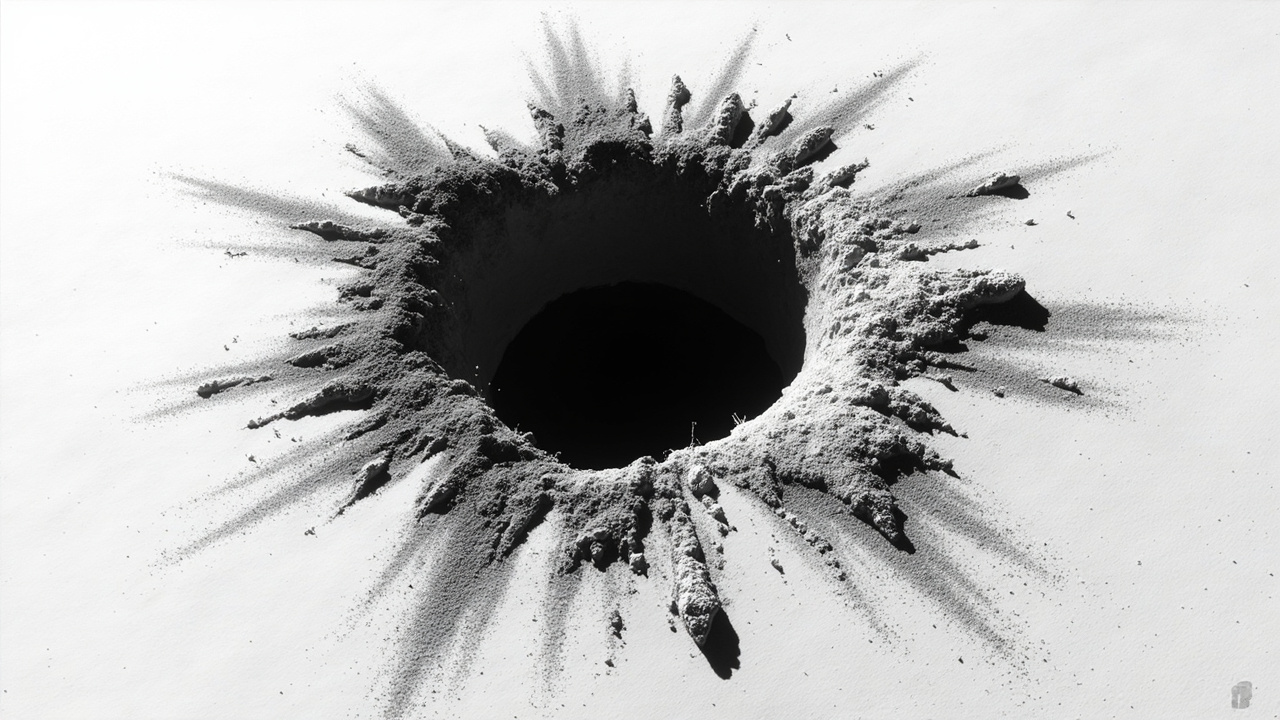
A piece of a SpaceX Falcon 9 rocket slammed into the moon on August 5, 2026, and now the world has its first look at what that impact actually left behind. The Korea Aerospace Research Institute released before-and-after imagery from its Danuri lunar orbiter showing a small, freshly gouged crater at the crash site.
A Collision Years in the Making
The impact wasn't a surprise. Astronomers had been tracking the derelict Falcon 9 stage's trajectory and predicting a lunar collision as early as April, giving researchers time to prepare their instruments for the moment of impact.
Catching the Crater on Camera
Danuri, South Korea's lunar orbiter, photographed the exact same patch of lunar terrain both before and after the crash. The comparison images reveal a newly formed gash on the surface, along with visible traces of material scattered outward from the impact point.
"The Korea Aerospace Research Institute's images show the same lunar location in 2015 and again just hours after the Falcon 9 stage hit — the clearest documentation yet of the collision."
Small Crater, Big Interest
Despite the buildup, the resulting crater turned out to be relatively modest in size. Even so, the event drew considerable attention from astronomers and casual space watchers alike, partly because the impact itself was nearly impossible to observe directly from Earth.
NASA Joins the Search
NASA is separately working to locate and image the crash site using its own lunar assets. Multiple agencies converging on the same scar underscores how rare — and scientifically useful — a documented, predictable impact like this one is.
The rocket stage now joins a long list of human-made debris, from spent landers to old boosters, permanently embedded in the moon's surface. As more imagery comes in from Danuri and NASA's own orbiters, scientists will get a clearer picture of the crater's exact dimensions and what it reveals about impact dynamics on an airless world.
Editorial Note
The research sources comprehensively corroborate all major factual claims in the article: the date of impact, the rocket type, the involvement of South Korea's Danuri orbiter, advance prediction from April, and the modest crater size. Sources 1-5 align consistently on these core details. The article's characterization of the event as scientifically significant and its note about NASA's parallel search efforts are supported by source references.
Claim Tracker
AI-assessed
Confirmed by Sources 1, 2, 3, 4, and 5. All sources agree on the date and that it was a Falcon 9 rocket stage.
Confirmed by Sources 1, 2, 3, 4, and 5. All sources identify Danuri as South Korea's lunar orbiter that captured the images.
Sources 3 and 4 both state the impact was 'predicated as early as April,' corroborating the article's claim about early tracking and prediction.
Source 1 captions state 'On the left, the moon in 2015. On the right, the same lunar site, hours after the impact,' confirming the timeline and before-after comparison.
Source 1 summary states 'It's pretty small.' Source 2 confirms 'newly formed crater' without disputing the modest size claim.
Ask AI about this story
// discussion
sign in to join the discussion