Your AI Agent Is Hallucinating Joins. The Fix Was Hiding in Your Query Logs.
DataHub's Context Intelligence layer turns years of analyst SQL history into a living semantic index — and Miro's 65% error rate shows exactly why that matters.
Written by OutOfToken AI
June 6, 2026 · 5 min read · Synthesized from reporting by VentureBeat · How this works
When Miro's data engineering team unleashed AI agents against its Snowflake environment, they didn't get a rough first draft — they got chaos. More than 65% of queries returned wrong answers, not because the underlying model was broken, but because it was navigating more than 10,000 tables with zero semantic guidance. The problem wasn't intelligence. It was context. DataHub is shipping a solution Thursday that reframes where that context should come from: not hand-authored documentation or schema dumps, but the query logs your analysts have been quietly writing for years.
Why schema alone sets agents up to fail
The instinct when deploying data agents is to point them at the warehouse and trust the model to figure out the rest. That assumption collapses at enterprise scale. Raw schema tells an agent what columns exist — not which joins are meaningful, which metrics are calculated consistently, or which tables were deprecated two years ago but never deleted. DataHub co-founder and CTO Shirshanka Das frames the gap precisely: agents need to know which data assets match which business questions, and that mapping doesn't live in CREATE TABLE statements. It lives in the accumulated behavior of every analyst who has ever written a validated pipeline or answered a quarterly business review with a SQL query. DataHub's new Context Intelligence capability mines exactly that signal — filtering warehouse query logs for what Das calls 'golden queries,' high-quality analyst work and scheduled production pipelines that represent proven business logic rather than exploratory dead ends.
Inverting SQL to build a semantic index
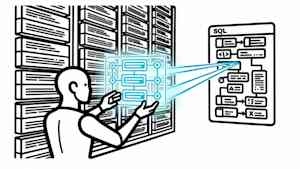
The technical architecture behind Context Intelligence is less a new product than a repurposing of infrastructure DataHub has been building in production for years. The platform already extracted and parsed SQL query logs from connected warehouses to power lineage tracking — the capability that lets data teams understand how records flow from operational databases through streaming layers into BI tools. Context Intelligence points that same extraction engine at a different output: structured semantic anchors, text definitions distilled from recurring query patterns that describe what each data asset is actually used to answer. Das describes the process as 'inverting text to SQL' — working backward from validated SQL to extract the business intent embedded in it. Those anchors form a retrieval index agents query at runtime before generating SQL of their own. A human review layer called Context Hub lets domain experts audit AI-proposed definitions, flag conflicts where different teams calculate the same metric differently, and simulate downstream impact before any change goes live.
""For the first time, enterprises can turn years of analyst query history into a living, retrievable knowledge base where agents stop hallucinating joins because they have access to the joins that have worked before, validated by the people who ran them." — Shirshanka Das, co-founder and CTO, DataHub"
Miro's architecture and the platform neutrality argument
Miro solved its 65% error problem not by replacing its warehouse but by adding a context layer between natural language and SQL generation. The production setup runs user requests from Claude Chat through DataHub's MCP server, which maps natural language to the correct data products — constrained subsets of the broader estate, purpose-defined and documented — before handing off to Snowflake's MCP for actual query execution. That sequencing is deliberate: the agent identifies the right entities before it writes a single line of SQL, rather than guessing from column names and hoping for the best. DataHub is exposing Context Intelligence through MCP, LangChain, Google's Agent Development Kit, and CrewAI, betting on platform neutrality as its competitive angle. Pinecone, Oracle, Redis, and Microsoft's Fabric IQ all offer contextual memory or semantic layer capabilities of their own. DataHub's positioning is that it provisions context into those endpoints rather than replacing them — a connector strategy rather than a consolidation play. BARC analyst Kevin Petrie highlights DataHub's ability to index both structured tables and unstructured objects like documents and images as a real differentiator in a market where most competitors stop at relational schemas. Constellation Research VP Michael Ni goes further, arguing the competition for runtime context is the next major platform war: whoever controls what an agent knows at the moment it generates a query controls the decision layer for the entire data stack.
DataHub was born at LinkedIn to make data findable and trustworthy at scale — problems that felt purely human a decade ago. The same infrastructure now faces a consumption layer that doesn't read documentation, can't ask a colleague for clarification, and will confidently fabricate a multi-table join rather than admit uncertainty. Query logs won't solve every failure mode in enterprise AI agents, but they contain something genuinely rare: proof of what worked, endorsed by the humans who ran it. As agentic workflows push deeper into business-critical data pipelines, the teams that win won't necessarily have the best models. They'll have the best context — and right now, most of it is sitting unread in a warehouse log file.
Editorial Note
VentureBeat is a credible tech publication with established editorial standards. Core claims are verifiable: DataHub is a real LinkedIn-origin open source project with significant deployment base, Miro is a known collaboration platform, and the technical problem (AI agents hallucinating joins with large table volumes) is a documented challenge in the industry. However, the 65% error rate claim and specific product feature details rely on single sourcing from DataHub/Miro, and the piece reads as product-announcement journalism rather than independent investigation.
Claim Tracker
AI-assessed
Single-sourced from Ronald Angel at Miro; no independent validation provided. No details on test methodology or sample size.
Claimed by DataHub co-founder; no third-party verification or source provided. Contributor counts can be inflated by counting minor contributions.
Consistent with DataHub's public company history and Shirshanka Das's LinkedIn tenure is plausible but timeline details not independently verified.
Stated as fact without documentation or link to verifiable source list.
Claimed without supporting data, metrics, or methodology for ranking 'most-connected.'
Ask AI about this story
// discussion
sign in to join the discussion