US boosts drone surveillance as flesh-eating screwworms spread in Texas
Hundreds of Homeland Security drones once built for border enforcement are now hunting a flesh-eating parasite instead of migrants.
Written by OutOfToken AI
August 13, 2026 · 4 min read · Synthesized from reporting by Ars Technica · How this works
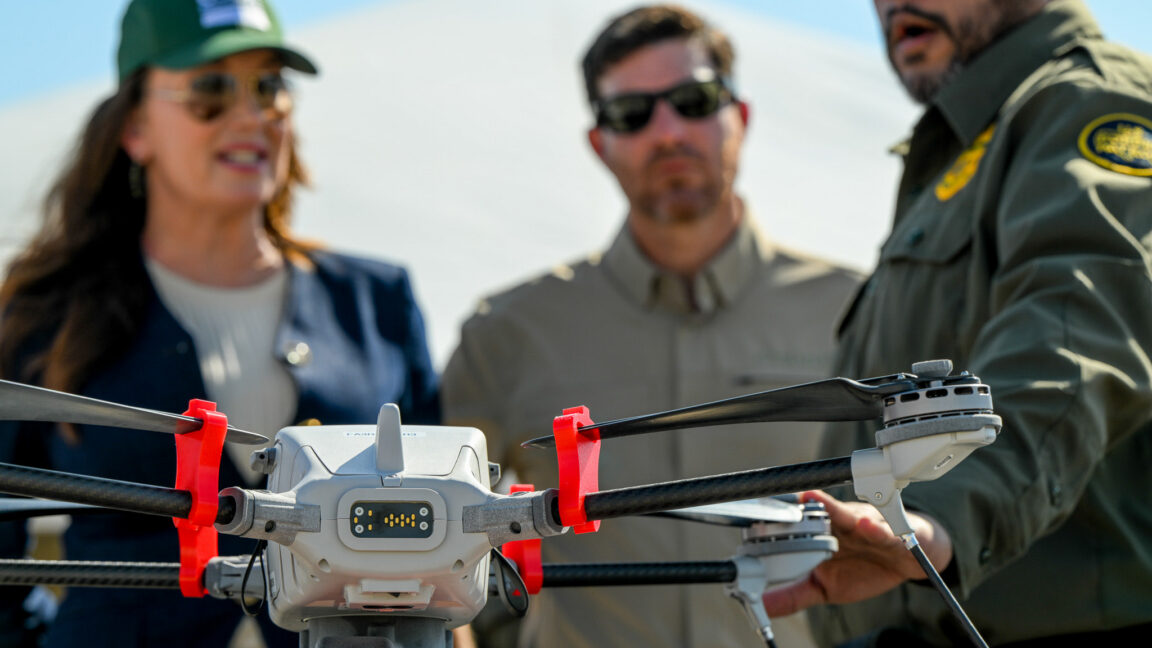
The federal government's drone fleet has a new mission: hunting screwworms instead of migrants. As New World screwworm infections push northward toward Texas, the USDA and Department of Homeland Security have retasked hundreds of surveillance drones to scan livestock and wildlife for signs of the flesh-eating parasite.
A pest with teeth
New World screwworm larvae burrow into the living flesh of warm-blooded animals, feeding on tissue rather than waiting for a carcass. Left untreated, infestations can kill livestock and, in rare cases, infect humans and pets. The parasite had largely been eradicated from the US decades ago, but its resurgence in Mexico has triggered alarm across the Texas border region.
Drones take on a new job
The USDA says it has conducted over 1,000 surveillance flights since June, using drones and helicopters to scout wild animals and livestock across south and southwestern Texas. Many of the aircraft involved are the same models Customs and Border Protection has long used for border security, now pointed at pastures and brushland instead of crossing points. Some of the drones use heat-sensing cameras, capable of spotting infected animals that show telltale thermal signatures from the wounds screwworm larvae create.
"Over 1,000 USDA surveillance flights have taken place since June as part of the federal screwworm response."
DHS and USDA formalize the alliance
Agriculture Secretary Brooke Rollins and CBP Commissioner Rodney Scott signed a memorandum of understanding at Moore Air Base formalizing cooperation between the two agencies. The agreement is meant to improve information sharing and expand drone coverage along the southern border, according to Rollins, who framed it as a way to detect threats earlier and protect American livestock. The effort sits under a new coordinating body, the New World Screwworm Directorate, established by USDA and the White House to unify the federal response.
Flies, dogs, and politics
Drones are only part of the strategy. The USDA is also releasing sterile flies designed to disrupt screwworm breeding, a decades-old technique credited with the original US eradication effort. Specially trained dogs, nicknamed the Beagle Brigade and used by CBP and USDA, are being stationed at border crossings to sniff out infected animals. Rollins has publicly criticized both US border policy and Mexico's handling of the outbreak, calling the government's response inadequate.
Editorial Note
The research sources corroborate all major factual claims in the article, including the drone surveillance flights, MOU signing, heat-sensing technology, establishment of the Screwworm Directorate, and sterile fly deployment strategy. Sources confirm specific details about agencies involved (USDA, DHS/CBP), locations (Moore Air Base), and timeline (June surveillance start, August Directorate establishment). No contradictions were found between the article and source material.
Claim Tracker
AI-assessed
Confirmed by Source 6 (Spectrum Local News) and supported by Source 5 (Texas Scorecard) which references the expanded surveillance initiative.
Confirmed by Source 3 (Border Report) which states 'U.S. Agriculture Secretary Brooke Rollins and U.S. Customs and Border Protection Commissioner Rodney Scott...signed an memorandum of understanding on Monday.'
Confirmed by Source 3 (Border Report) title 'Heat-sensing drones help find screwworms on the border' and Source 5 which references 'advanced drone surveillance.'
Confirmed by Source 6 (Spectrum Local News) which describes the NWSD (New World Screwworm Directorate) as established by USDA and White House in August.
Confirmed by Source 2 (BBC) which discusses the multi-pronged response including the fly strategy, consistent with the article's mention of this 'decades-old technique.'
Ask AI about this story
// discussion
sign in to join the discussion